
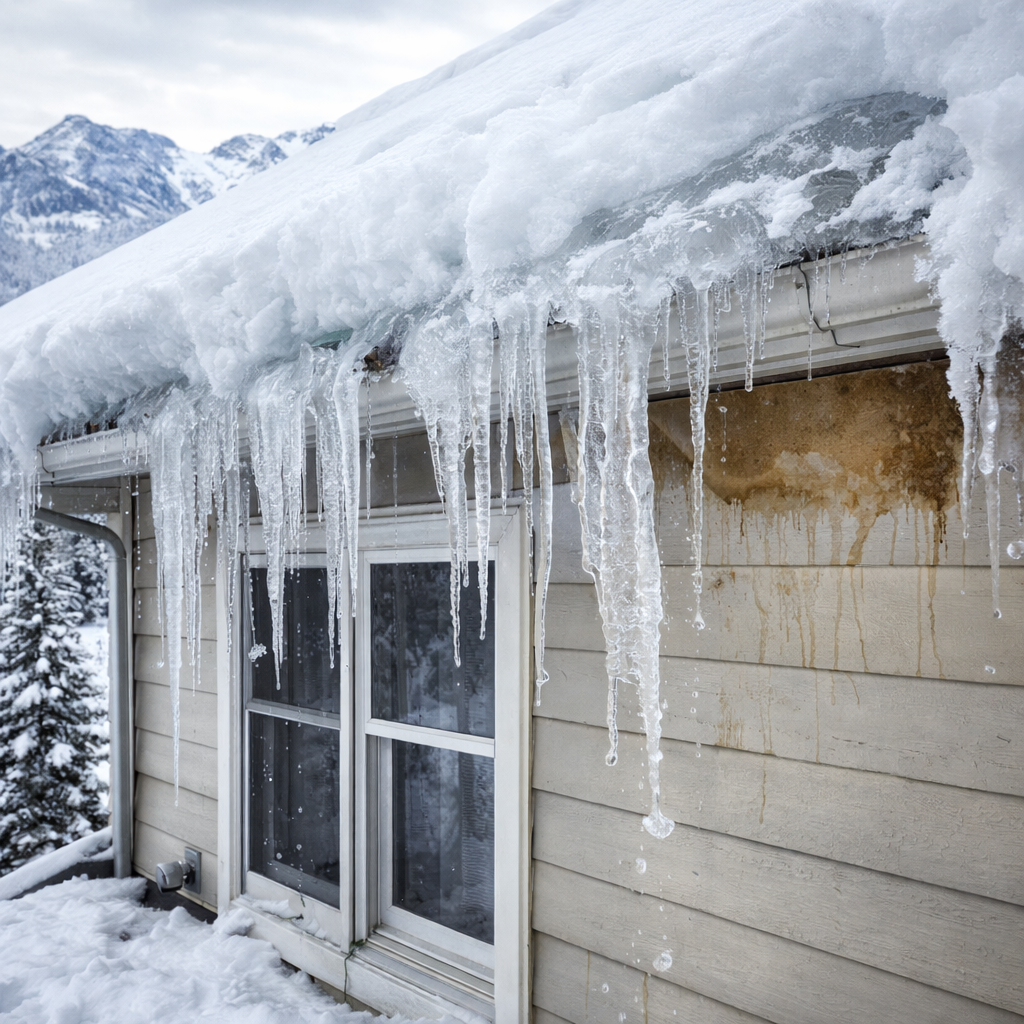
Utah winters bring a lot of good things — fresh powder, cozy nights, and mountain views dusted in snow. Unfortunately, they can also bring something far less charming: ice dams.
If you’ve ever noticed thick ridges of ice forming along the edge of your roof, you’ve seen an ice dam in action. And while they might look harmless at first, ice dams can cause serious damage if left unchecked.
Let’s walk through what ice dams are, why they happen, how to prevent them, and who to call if damage occurs.
❄️ What Is an Ice Dam?
An ice dam forms when snow on your roof melts, flows downward, and refreezes at the colder roof edge (usually near the eaves).
Here’s how it happens:
- Warm air from inside the home heats the upper part of the roof
- Snow melts and runs down
- The roof edge stays cold, causing the water to refreeze
- Ice builds up and traps additional melting snow behind it
Over time, that trapped water can work its way under shingles and into the home.
? Why Ice Dams Can Be a Problem
Ice dams don’t usually cause damage right away — but once water starts backing up, things can escalate quickly.
Potential issues include:
- Roof and shingle damage
- Water intrusion into attics
- Stained ceilings or walls
- Wet insulation
- Mold growth if moisture goes unnoticed
Because ice dams affect the roof and structure, they’re typically considered a homeowners insurance issue, not a home warranty matter.
? How to Prevent Ice Dams
The goal is to keep your roof temperature consistent so snow doesn’t melt unevenly.
✅ Improve Attic Insulation
Proper insulation keeps heat inside your living space instead of escaping through the roof.
✅ Seal Air Leaks
Gaps around attic access points, light fixtures, and vents allow warm air to rise and heat the roof.
✅ Keep Gutters Clear
Clogged gutters trap ice and water, making dams worse.
✅ Maintain Proper Ventilation
A well-ventilated attic allows cold air to circulate and keeps roof temperatures stable.
? Signs an Ice Dam May Be Causing Damage
Watch for:
- Icicles forming thick ridges along roof edges
- Water stains on ceilings or walls
- Dripping water during freezing temperatures
- Peeling paint near exterior walls
If you see these signs, it’s a good idea to contact a roofing professional or your homeowners insurance provider promptly.
?️ Insurance vs. Home Warranty: What’s the Difference?
It’s easy to assume all home issues are covered the same way — but coverage depends on what is damaged.
Typically covered by homeowners insurance:
- Roof damage
- Structural water intrusion
- Ice dam–related roof repairs
Typically covered by a home warranty:
- Interior systems and appliances
- Heating, cooling, plumbing, electrical systems
- Mechanical failures inside the home
? Where SilverBack Can Help
While roof damage itself isn’t covered by home warranties, SilverBack Home Warranty is here to help with covered systems inside the home if something stops working.
Utah winters put a lot of stress on:
- Heating systems
- Electrical components
- Plumbing lines
If one of those systems fails, our team can help guide you through next steps and connect you with service support.
❄️ The Bottom Line
Ice dams are a winter reality in Utah — but they don’t have to turn into a major headache. Understanding how they form, taking preventative steps, and knowing who to call can save time, money, and stress.
For roof-related damage, your homeowners insurance is usually the right place to start.
For systems inside your home that stop working, SilverBack is here when you need us.
Because even when winter gets messy, we’ve got your back.
? Helpful Resources
- Visit SilverBackHW.com for more information
- Call 833-750-6400 with questions about coverage
- Place an order anytime at SilverBackHW.com/orders