
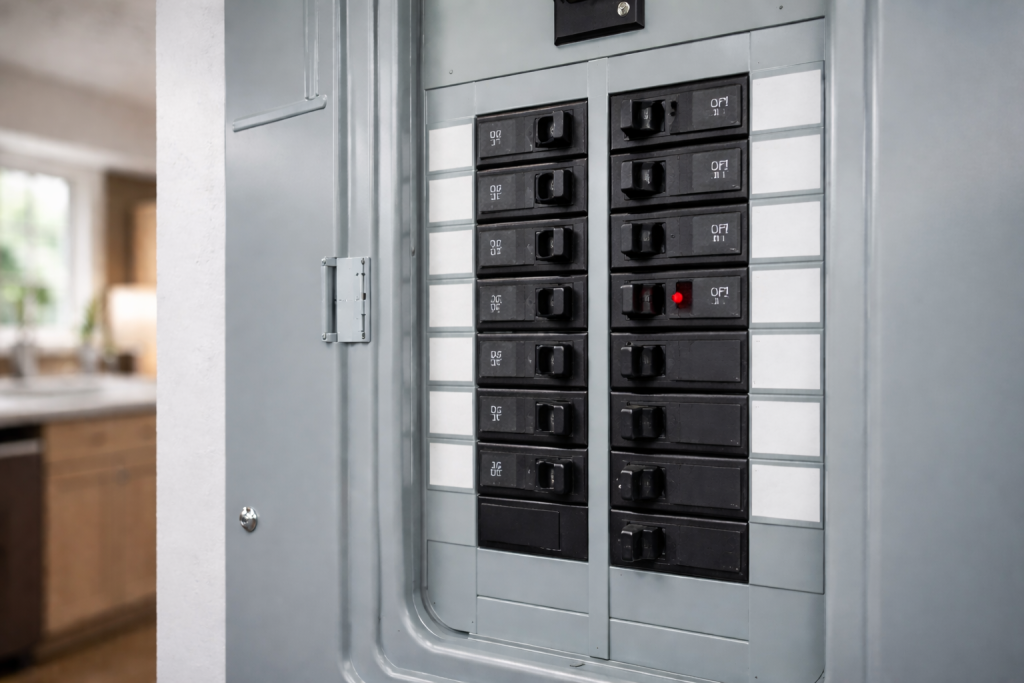
Your electrical panel is one of the hardest-working systems in your home — and one of the least understood. Most homeowners only think about it when something shuts off unexpectedly. But understanding a few basics about loads, breakers, and warning signs can help you stay safe and avoid bigger problems.
In Utah homes — especially older properties — electrical systems may be under more strain than they were originally designed for. Between modern appliances, home offices, EV chargers, and winter heating demands, today’s electrical loads look very different than they did 20 years ago.
Let’s break down what every homeowner should know.
What Your Electrical Panel Actually Does
Your electrical panel is the central hub that distributes power throughout your home. It receives electricity from the utility company and safely routes it to individual circuits.
Inside the panel you’ll find:
- Main breaker (controls power to the whole home)
- Individual circuit breakers
- Bus bars (distribute electricity)
- Grounding system
Each breaker is designed to protect a specific circuit from overload. When a breaker trips, it’s doing its job — preventing overheating, electrical damage, or fire risk.
Understanding Electrical Loads
An electrical “load” refers to the amount of power being drawn by devices connected to a circuit. Every circuit has a limit, measured in amps.
Common examples of high loads include:
- Space heaters
- Microwaves
- Hair dryers
- Refrigerators
- HVAC systems
- Electric vehicle chargers
If too many devices run on the same circuit at once, the breaker trips to protect the wiring.
In many Utah homes built before the 2000s, panels were sized for lower demand. Modern usage can push older panels close to their limits.
Why Breakers Trip
Breakers typically trip for three main reasons:
Overloaded Circuit
Too many devices drawing power at once.
Short Circuit
A hot wire touches a neutral or ground wire, creating a sudden surge.
Ground Fault
Electricity escapes the intended path and seeks ground, often in damp environments like bathrooms or kitchens.
Occasional tripping can be normal. Frequent tripping is not.
Warning Signs Of Electrical Panel Problems
Understanding the difference between minor issues and serious failure is important.
Watch for:
- Breakers that trip repeatedly
- Burning smells near the panel
- Warm or hot panel surface
- Flickering lights
- Buzzing sounds
- Visible corrosion or rust inside the panel
- Breakers that won’t reset
If you notice burning smells, sparking, or heat, call a licensed electrician immediately.
When To Call A Professional
Some electrical issues are DIY-friendly. Others are not.
You can safely:
- Reset a tripped breaker
- Check for overloaded circuits
- Unplug excess devices
You should call a licensed electrician if:
- Breakers trip repeatedly
- The panel feels warm
- You see scorch marks
- You hear buzzing or crackling
- You’re planning to add high-demand appliances
- Your home still has outdated panel types
Electrical panels are not a place to experiment. Safety should always come first.
Older Panels And Modern Utah Homes
If your home is 25–40 years old, your panel may not have been designed for:
- Multiple refrigerators
- Large HVAC systems
- Electric car chargers
- Home office equipment
- High-end kitchen appliances
In some cases, a panel upgrade may be necessary to safely handle modern loads.
An electrician can perform a load calculation to determine whether your current panel is sufficient.
What A Home Warranty Covers
A home warranty does not cover panel upgrades, code corrections, or increased electrical capacity. It also does not cover issues caused by improper modifications or pre-existing conditions.
However, a SilverBack Home Warranty may help when covered electrical components fail due to normal wear and tear, such as:
- Breakers that no longer function
- Interior wiring failures
- Electrical system components that stop working properly
Coverage applies when the system experiences mechanical or electrical breakdown — not when it simply needs modernization or capacity expansion.
Why Understanding Your Panel Matters
Your electrical system is critical to:
- Heating and cooling
- Appliance operation
- Lighting and safety
- Modern technology
Staying aware of warning signs helps prevent fire hazards and protects your home.
Utah winters, summer AC loads, and growing energy demands mean electrical systems are under more pressure than ever. Knowing when something is a simple overload — and when it’s a deeper failure — keeps you ahead of problems.
The Bottom Line
Your electrical panel may be out of sight, but it should never be out of mind. Occasional breaker trips are normal. Frequent issues, heat, or unusual smells are not.
Routine awareness, professional inspections when needed, and protection for unexpected breakdowns give you peace of mind.
When a covered electrical component inside your home fails due to normal wear and tear, SilverBack is here to help.
Because when your systems stop working, we’ve got your back.
Call 833-750-6400 with questions about coverage
Place an order anytime at SilverBackHW.com/orders