
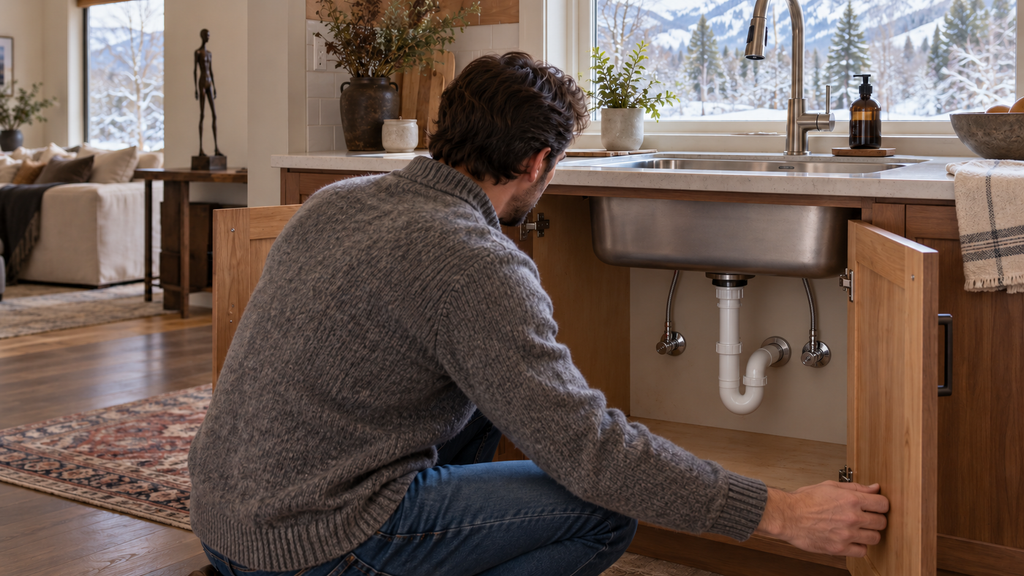
Taking a few steps to prevent frozen pipes can make a big difference when Utah temperatures drop.
Winter already gives homeowners plenty to manage. There are snowy driveways, icy sidewalks, and the annual mystery of where everyone’s matching gloves went.
A frozen water line does not need to join the list.
At SilverBack Home Warranty, we want homeowners to feel more confident caring for their homes—not just know whom to call after something breaks.
This guide explains where pipes are vulnerable, how to reduce the risk of freezing, and what to do if a faucet suddenly stops flowing.
You do not need to become a plumber. A little preparation and knowing when to ask for help can go a long way.
Why Do Frozen Pipes Cause Problems?
Water expands when it freezes. In a plumbing system, that expansion can create enough pressure to damage a pipe.
The leak may become apparent as the ice thaws and water begins moving again.
Pipes exposed to severe cold, located in unheated spaces, or running along poorly insulated exterior walls are particularly vulnerable. Both metal and plastic pipes can be affected. American Red Cross
That means a warm living room does not necessarily tell you how cold the plumbing behind a cabinet or inside another part of the house has become.
Find Your Home’s Vulnerable Plumbing
Before a cold spell, make a quick list of places where plumbing may be exposed to low temperatures.
Common areas to consider include:
- An attached garage
- An unheated crawl space
- Unfinished areas near exterior walls
- Kitchen and bathroom cabinets against outside walls
- Outdoor faucets and irrigation equipment
You do not need to open walls or crawl into an unsafe space.
Start with what you can see and what you already know about the house. If a particular sink has frozen before, put it at the top of the list.
Consider keeping a simple note:
“North kitchen wall: ask plumber about insulation before winter.”
A specific reminder is easier to act on than “do something about the pipes.”
Keep Heat Circulating Around Plumbing
During severe cold, avoid making large overnight thermostat reductions.
The American Red Cross recommends keeping the thermostat consistent through the day and night during very cold weather. It also recommends opening sink cabinets so household warmth can reach the plumbing. Move cleaning products and other hazards out of children’s and pets’ reach first. American Red Cross
This is particularly useful to remember for sinks on exterior walls.
Opening a cabinet is simple. Remembering to do it before bed is usually the harder part.
Put a reminder near the thermostat when a cold snap is forecast.
Keep the Garage Door Closed
If your garage contains water supply pipes, keep the garage door closed when you are not entering or leaving.
Salt Lake City Public Utilities includes this among its frozen-pipe prevention recommendations. Public Utilities
It is an easy detail to overlook while unloading groceries or working on a project.
Take a moment to check the door before settling in for the evening, especially when temperatures are falling.
Insulate Exposed Pipes Before the Cold Arrives
Properly fitted pipe insulation can help slow heat loss around vulnerable plumbing.
Utah State University Extension recommends covering exposed pipes and fittings completely and checking for leaks before installing insulation.
It also makes an important distinction: insulation alone cannot protect plumbing indefinitely during prolonged freezing conditions without a source of warmth or water movement. USU
If a pipe keeps freezing despite insulation, ask a plumber to evaluate the underlying problem.
The solution may require more than another layer of foam.
If heat cable is recommended, use a product suitable for the pipe and follow its installation instructions. Do not improvise with an ordinary extension cord or unrelated heating product.
Disconnect Hoses and Prepare Outdoor Plumbing
Outdoor plumbing deserves attention before freezing weather becomes routine.
Remove, drain, and store garden hoses. Have sprinkler and pool supply lines winterized according to the installer’s or manufacturer’s directions.
Provo’s winter water-safety guidance includes these steps as part of protecting household plumbing. provo.gov
Exterior faucets have different designs, so follow the procedure appropriate for your home.
If you are unsure whether an outdoor faucet has an indoor shutoff or needs a particular draining procedure, ask a plumber.
Guessing at valves is rarely the most relaxing way to spend a fall afternoon.
Should You Let a Faucet Drip?
A small flow through vulnerable plumbing can help during unusually cold conditions. Salt Lake City Public Utilities recommends a slow drip as one protective measure.
However, Utah State University Extension cautions that running water uses a valuable resource and should not replace more lasting protection. Public Utilities
Use your local utility’s current advice and ask a plumber which fixtures, if any, need this precaution.
Do not assume every faucet needs to run all winter.
The goal is to protect a vulnerable line while addressing the conditions that make it vulnerable.
Make a Plan Before Leaving Town
A winter trip should involve deciding what to pack—not wondering whether the house is warm enough back home.
Leave the heating system operating and choose a temperature appropriate for your property.
Published recommendations differ. Salt Lake City Public Utilities advises a setting above 65°F when leaving for multiple days. Follow local guidance and your home’s particular needs rather than treating any thermostat number as a guarantee against freezing. Public Utilities
Arrange for someone to check the home.
Give that person:
- A way to contact you
- Your plumber’s information
- The location of the main water shutoff
- Instructions for responding to a heating failure or leak
For an extended vacancy, ask a professional whether the home needs a winterization plan.
Know the Signs of Frozen Pipes
A faucet that suddenly produces only a trickle—or no water—during freezing weather may have a frozen supply line.
Check whether other fixtures are affected. One pipe freezing can mean others are vulnerable too.
If the whole home loses water, contact your utility to ask about service interruptions rather than assuming the problem is inside your house. Provo’s guidance recommends checking other faucets when freezing is suspected. provo.gov
Write down what you notice before calling for help.
For example:
“The kitchen cold-water faucet stopped flowing overnight, but the bathroom faucets still work.”
That gives a plumber a useful starting point.
What to Do If a Pipe Freezes
First, look for leaking, visible damage, or water near electrical equipment.
If you suspect a pipe has split, shut off the main water supply if you can safely reach and operate it, and call a plumber.
For an accessible frozen line, a licensed plumber is a sensible choice—particularly when you do not know whether the pipe has been damaged.
Take a Cautious Approach to Thawing
If you are comfortable attempting to thaw an accessible pipe, Utah State University Extension advises shutting off the main supply first and opening the affected faucet.
Use gentle, gradual warmth. Keep electrical devices away from water, and avoid boiling water or an open flame. USU
WaterOne similarly recommends beginning near the faucet end and working toward the frozen section. Its guidance warns against using electrical appliances while standing in water. waterone.org
Do not use a torch, propane heater, or other flame.
If the pipe is hidden, difficult to reach, visibly damaged, or will not thaw, stop and call a licensed plumber.
Once the line thaws, check carefully for leaks as water service is restored. Ask for professional help if you are uncertain how to do that safely.
What If the Pipe Starts Leaking?
Your immediate goal is to stop additional water damage safely.
Close the appropriate shutoff valve if you can reach it without entering a hazardous area.
Keep clear of standing water near electrical equipment. Move belongings only when it is safe, and contact a plumber.
Our guide to finding your main water shutoff valve can help you prepare before an emergency.
The best time to locate that valve is when you do not need it.
Show other responsible household members where it is, too.
How Does SilverBack Cover Plumbing Pipe Leaks?
SilverBack Home Warranty covers qualifying plumbing pipe leaks caused by normal wear and tear, subject to your plan’s terms, applicable limits, and service-call fees.
That protection can help offset the cost of an eligible interior plumbing repair.
For example, a plumber may diagnose a covered interior pipe leak as a qualifying normal-wear-and-tear failure. SilverBack reviews that diagnosis and the repair under the homeowner’s contract.
Freeze-related damage is different and is excluded under the contract. The cause of the leak determines how coverage applies—not simply the fact that a pipe is leaking.
We share winter prevention information because helping homeowners care for their homes matters, including situations outside warranty coverage.
If you are unsure about a plumbing problem, contact SilverBack before arranging claim-related repairs so we can explain the process.
Frequently Asked Questions About Frozen Pipes
How can I help prevent frozen pipes in Utah?
Identify vulnerable plumbing, maintain heat, allow warm air around sink pipes, keep garage doors closed, and prepare outdoor lines. Ask a plumber about recurring trouble spots.
Does pipe insulation guarantee pipes will not freeze?
No. Insulation slows heat loss, but prolonged freezing conditions can still create problems without warmth or appropriate water movement. USU
What should I do if only one faucet stops working during a cold spell?
Check other fixtures, look for signs of leaking, and contact a plumber if freezing is suspected. Do not assume a hidden pipe can be thawed safely without evaluation.
Can I use a torch to thaw a pipe?
No. Open flames create a fire hazard. Use professional help when you cannot safely access or thaw the line. provo.gov
Does SilverBack cover frozen pipes?
Freeze-related damage is excluded. SilverBack covers qualifying plumbing pipe leaks caused by normal wear and tear under the applicable contract.
Should I wait for a frozen pipe to thaw on its own?
Arrange help rather than assuming the problem will resolve safely. A damaged pipe may leak once water begins moving again.
A Little Preparation Can Make Winter Easier
You cannot control the forecast.
You can learn where your vulnerable pipes are, prepare outdoor plumbing, and make sure your household knows how to shut off the water.
Pick one useful task today.
Disconnect the hose.
Find the shutoff.
Check the garage door.
Call about the pipe that froze last winter.
At SilverBack, we want homeowners to have practical information before a problem becomes a stressful surprise. Sometimes that means helping with a covered repair. Sometimes it means sharing a simple step that helps you avoid trouble altogether.
Call 833-750-6400 with questions about your plan or a potential covered plumbing claim.
SilverBack Home Warranty — We’ve got your back.