
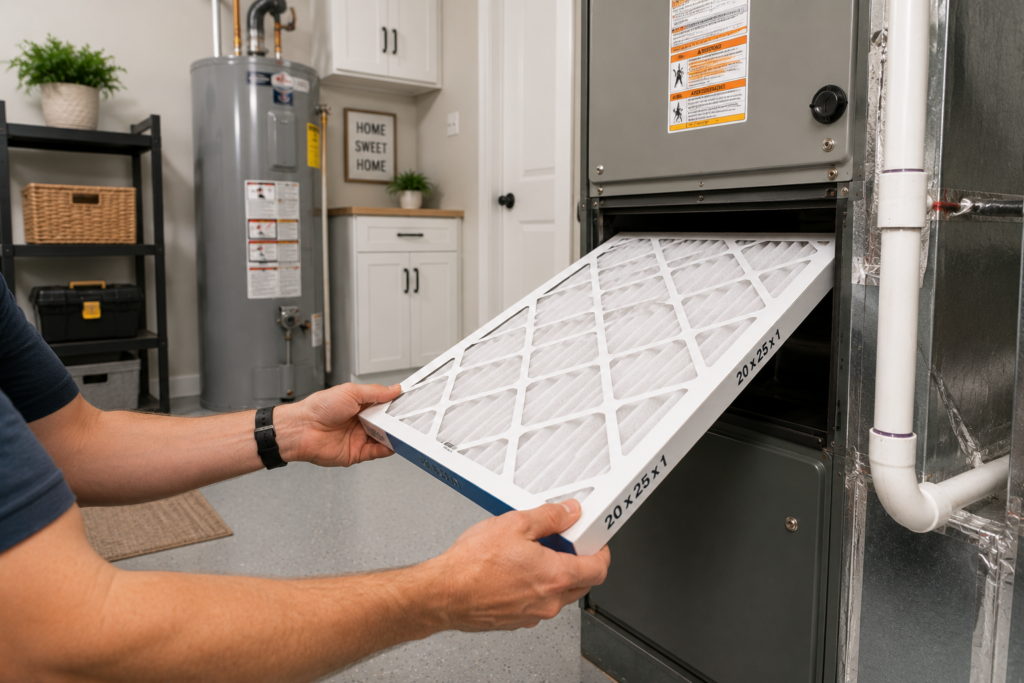
One of the easiest and most important things a homeowner can do is also one of the most commonly forgotten:
Changing the HVAC filter.
Your heating and air conditioning system works hard throughout the year. During Utah’s hot summers and cold winters, your HVAC system may run for months at a time with very little downtime. A clean filter helps that system operate efficiently, maintain proper airflow, and reduce unnecessary strain on critical components.
The best part? Most homeowners can replace an HVAC filter in just a few minutes.
Let’s look at why this simple maintenance task matters so much.
What Does An HVAC Filter Do?
The HVAC filter serves two important purposes.
First, it helps improve indoor air quality by capturing:
- Dust
- Dirt
- Pet dander
- Pollen
- Airborne particles
Second, it helps protect your HVAC system itself.
As air moves through your furnace or air conditioner, the filter prevents debris from reaching sensitive components such as:
- Blower motors
- Evaporator coils
- Heat exchangers
- Ductwork
Without a clean filter, dirt can accumulate throughout the system and reduce performance.
What Happens When A Filter Gets Clogged?
A dirty filter restricts airflow.
When airflow becomes restricted, your HVAC system has to work harder to move air throughout the home.
This can lead to:
- Reduced heating and cooling performance
- Uneven temperatures
- Higher utility bills
- Increased wear on system components
- Shortened equipment lifespan
In severe cases, restricted airflow can contribute to overheating, frozen coils, or system shutdowns.
How Often Should You Change Your HVAC Filter?
The answer depends on your home and lifestyle.
Many homeowners should check their filter every 30 to 90 days.
You may need more frequent replacement if:
- You have pets
- Someone in the home has allergies
- You live in a dusty area
- Your HVAC system runs frequently
- You have ongoing construction or remodeling
A quick monthly inspection can help determine whether replacement is needed.
When in doubt, follow the manufacturer’s recommendations for your specific system.
Signs Your Filter Needs To Be Replaced
Not sure whether it’s time for a new filter?
Watch for these common signs:
- Visible dust buildup on the filter
- Reduced airflow from vents
- Increased dust inside the home
- Higher energy bills
- Rooms that are difficult to heat or cool
- HVAC system running longer than normal
If the filter appears dirty when held up to a light source, it’s probably time for a replacement.
Choosing The Right Filter
Not all filters are the same.
Filters are often rated using a MERV (Minimum Efficiency Reporting Value) rating.
Higher ratings capture smaller particles, but extremely restrictive filters may reduce airflow in systems not designed for them.
For most homes, a standard residential filter provides a good balance between filtration and airflow.
If you’re considering a higher-performance filter, consult an HVAC professional to ensure compatibility with your system.
Why Utah Homeowners Should Pay Attention
Utah’s climate presents unique challenges for HVAC systems.
Throughout the year, homes may experience:
- Spring pollen
- Summer dust
- Wildfire smoke
- Winter inversions
- Pet dander trapped indoors during colder months
These conditions can cause filters to load up faster than homeowners expect.
Regular replacement helps maintain both comfort and system performance.
What A Home Warranty Covers
A home warranty helps when covered heating and cooling systems experience mechanical failure due to normal wear and tear.
However, home warranties do not replace routine maintenance.
Changing HVAC filters remains an important homeowner responsibility.
Failing to maintain the system according to manufacturer recommendations can contribute to performance issues and unnecessary wear.
The good news is that replacing a filter is one of the simplest and most affordable ways to help protect your HVAC investment.
Pair Filter Changes With Seasonal Tune-Ups
One of the best ways to keep your HVAC system operating properly is to combine regular filter changes with professional tune-ups.
SilverBack offers:
- Air Conditioning Tune-Ups: April 1 – June 1
- Heating Tune-Ups: October 1 – December 1
For the applicable service fee, one of our preferred contractors can inspect and evaluate your system to help identify potential issues before peak heating or cooling season arrives.
Preventative maintenance today may help reduce surprises tomorrow.
The Bottom Line
Changing your HVAC filter may not be exciting, but it is one of the most important maintenance tasks a homeowner can perform.
A clean filter helps improve airflow, supports system efficiency, reduces strain on equipment, and helps maintain indoor air quality.
Just a few minutes every month can help your heating and cooling system perform its best throughout Utah’s changing seasons.
And if a covered HVAC component eventually fails due to normal wear and tear, SilverBack is here to help.
Because when your systems stop working, we’ve got your back.
📞 Call 801-686-8927 to learn more about coverage.