
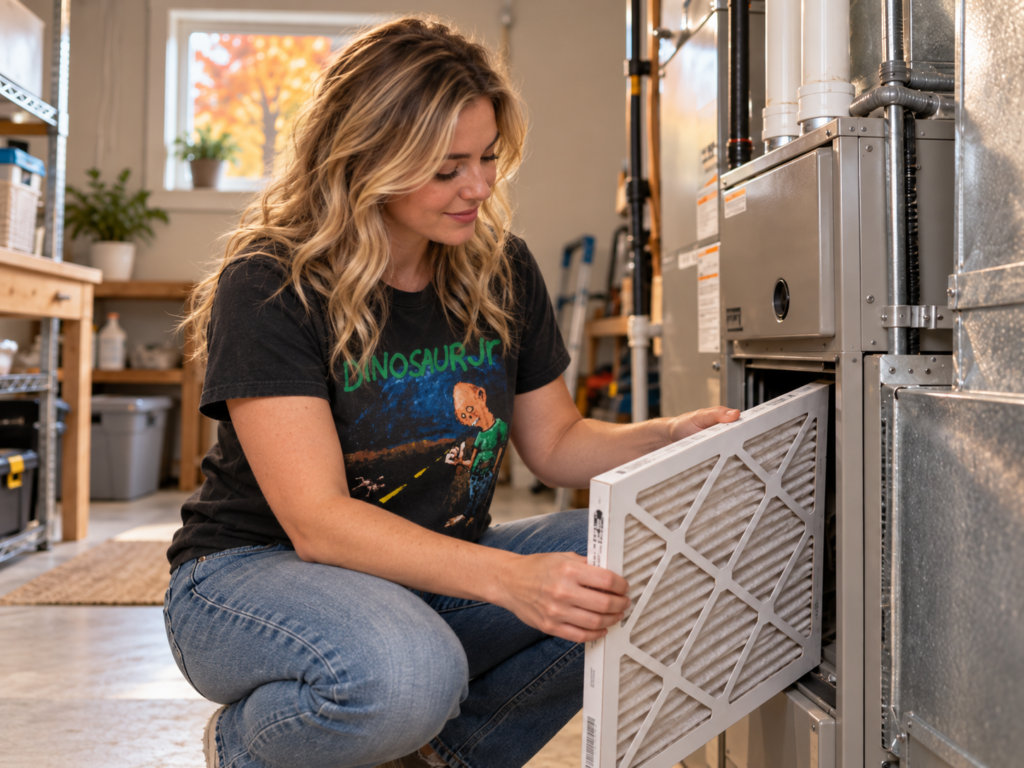
A good furnace maintenance checklist can help you spot simple problems before the first cold night of the season.
In Utah, heating systems can sit mostly unused for months before suddenly being asked to run every day. That makes early fall a good time to check the basics, pay attention to anything unusual, and make sure your furnace is ready before temperatures drop.
You do not need to take the furnace apart or perform complicated repairs yourself.
Most homeowners can handle a few simple maintenance and observation tasks safely.
Here are 10 things worth checking before you rely on your furnace for another Utah winter.
1. Replace or Inspect the HVAC Filter
Start with one of the simplest items.
A dirty HVAC filter can restrict airflow and make your heating system work harder than necessary.
Before heating season begins:
- Locate the filter
- Check its condition
- Replace it if it is visibly dirty
- Make sure the replacement is the correct size
- Install it in the proper airflow direction
Filter replacement frequency varies depending on the filter type, pets, dust, household conditions, and system use.
Rather than relying only on a calendar, inspect the filter regularly.
A clean filter supports better airflow and gives the system a better starting point for the season.
2. Test the Thermostat Before You Really Need Heat
Do not wait until the first freezing morning to discover that the thermostat is not communicating properly with the furnace.
Set the thermostat to Heat and raise the temperature a few degrees above the current room temperature.
Listen and observe.
The furnace should begin its normal startup sequence.
After a short period, warm air should begin coming from the vents.
If nothing happens, double-check:
- Thermostat mode
- Temperature setting
- Battery condition, if applicable
- Whether the furnace has power
If the system still will not start, professional diagnosis may be needed.
3. Pay Attention to the First Startup of the Season
The first time you run the furnace after several months, you may notice a dusty smell.
That can happen as dust that settled on components during the off-season warms up.
A mild dusty odor that fades relatively quickly can be normal.
What deserves more attention is a persistent or unusual smell such as:
- Burning electrical odor
- Melted plastic smell
- Strong gas-like odor
- Smoke
- A smell that gets worse instead of fading
If you notice something that seems unsafe, turn the system off and contact an HVAC professional or the appropriate utility/emergency resource.
4. Listen for New Furnace Noises
Every furnace has its own normal operating sounds.
You may hear:
- Airflow
- Blower noise
- A click during startup
- Ductwork expanding
- The system cycling on and off
What matters most is change.
Pay attention to new or unusually loud:
- Banging
- Rattling
- Screeching
- Grinding
- Repeated clicking
- Whistling
A strange noise does not automatically mean your furnace has mechanically failed.
It is simply a reason to pay closer attention and have a professional inspect the system if the sound persists or is accompanied by poor performance.
5. Check That Supply and Return Vents Are Open
Walk through the house and look at your vents.
Furniture, rugs, boxes, curtains, or other objects can block airflow.
Make sure supply registers are reasonably clear.
Also check return-air grilles.
Your HVAC system needs air moving through both sides of the system.
Blocking multiple vents can interfere with proper airflow and comfort.
If one room stays unusually cold even with an open vent, that may be worth investigating rather than simply closing vents elsewhere to compensate.
6. Clear the Area Around the Furnace
The space around your furnace should not become a storage closet.
Keep boxes, paper, cleaning products, paint, clothing, and other materials away from heating equipment.
This is especially important around gas-fired furnaces.
A clean utility area also makes it easier to:
- Inspect the furnace
- Change filters
- Notice leaks
- Hear unusual sounds
- Give technicians access for service
Take a few minutes before winter to clean up the furnace area.
7. Check Your Carbon Monoxide Detectors
Homes with fuel-burning appliances should have working carbon monoxide detection.
Before heating season:
- Test the alarms
- Replace batteries if required
- Check the age of the detector
- Follow the manufacturer’s replacement instructions
Do the same with smoke alarms while you are at it.
Do not wait for the furnace to develop a problem before thinking about household safety equipment.
8. Look for Visible Signs of Trouble
You do not need to open the furnace cabinet to perform a basic visual inspection.
Look around the equipment for things such as:
- Water on the floor
- Rust
- Corrosion
- Loose panels
- Damaged venting
- Unusual staining
- Signs of previous leaking
Some high-efficiency furnaces produce condensation as part of normal operation, but unexpected water around HVAC equipment still deserves attention.
If something looks different from previous years, have it checked.
9. Run the Furnace Before the First Cold Snap
One of the best things you can do is simply test the furnace early.
Pick a cool September or early October morning.
Turn the heat on and let the furnace operate long enough to confirm:
- It starts
- Warm air comes from the vents
- It runs without unusual behavior
- The thermostat responds properly
- The system eventually shuts off normally
Finding a problem in mild weather is much more convenient than discovering it during the first major freeze when HVAC contractors may be extremely busy.
10. Consider a Professional Furnace Tune-Up
Homeowner maintenance only goes so far.
A professional HVAC technician can inspect areas and components that homeowners should not attempt to service themselves.
Depending on the equipment, a furnace tune-up may involve checking:
- Electrical connections
- Burner operation
- Safety controls
- Blower components
- Venting
- System performance
- Other manufacturer-recommended items
A tune-up cannot guarantee that the furnace will never break.
But it can help identify problems, maintenance needs, or safety concerns before the system is under heavy winter demand.
SilverBack Home Warranty offers a seasonal fall furnace tune-up option for eligible homeowners during the designated tune-up period.
Current SilverBack information lists the fall furnace tune-up window as October 1 through December 1.
How Do You Know If Your Furnace Needs Professional Attention?
Consider calling an HVAC professional if:
- The furnace will not start
- The furnace starts but does not produce heat
- The system repeatedly turns on and off
- Airflow is unusually weak
- You hear loud or new mechanical noises
- You smell persistent burning or electrical odors
- The system struggles to reach the thermostat temperature
- You see water, corrosion, or visible damage
- A breaker repeatedly trips
- The furnace behaves significantly differently from last season
You do not need to wait for a complete breakdown before asking a professional to inspect something that seems unusual.
What If the Furnace Turns On but Blows Cold Air?
There are several possible causes.
Before calling for service, check the basics:
- Is the thermostat set to Heat?
- Is the fan set appropriately?
- Is the air filter dirty?
- Has the furnace had enough time to begin producing warm air?
If the system continues running without producing heat, the furnace may need professional diagnosis.
Do not repeatedly reset equipment or attempt to repair internal gas or electrical components yourself.
What If the Furnace Does Not Turn On at All?
Start with safe homeowner-level checks.
Make sure:
- The thermostat is powered
- The thermostat is set to Heat
- The requested temperature is higher than room temperature
- The furnace power switch has not accidentally been turned off
- The appropriate circuit breaker has not tripped
If a breaker trips again after being reset, do not keep resetting it.
That may indicate an electrical problem requiring professional attention.
How Often Should You Change Your Furnace Filter?
There is no universal schedule that works for every house.
Filter life depends on:
- Filter type
- Household size
- Pets
- Dust levels
- Construction activity
- System runtime
- Indoor air conditions
Some filters may need attention every month, while others are designed for longer service.
The safest habit is to inspect the filter regularly and follow the furnace and filter manufacturer’s recommendations.
If it looks dirty, replace it.
Should You Close Vents in Unused Rooms?
Generally, homeowners should be cautious about closing large numbers of supply vents in an attempt to save energy.
Residential HVAC systems are designed around a certain amount of airflow.
Closing too many vents can change system pressure and airflow.
If parts of your home are consistently too warm or cold, it may be better to have an HVAC professional evaluate airflow, ductwork, insulation, or system balancing.
Does a Furnace Tune-Up Prevent Breakdowns?
No maintenance visit can promise that a mechanical component will never fail.
Furnaces contain motors, controls, switches, electrical parts, and other components that experience normal wear over time.
A tune-up is more about:
- Identifying problems early
- Checking system operation
- Performing recommended maintenance
- Looking for safety concerns
- Preparing the system for the season
Think of it as preparation rather than a guarantee.
Does a Home Warranty Cover Furnace Problems?
SilverBack Home Warranty provides coverage for qualifying mechanical breakdowns of covered home systems due to normal wear and tear, subject to the homeowner’s specific plan, coverage limits, exclusions, service call fees, and other contract terms.
A dirty filter or routine maintenance need is different from a mechanical breakdown.
Likewise, a furnace making an unusual sound does not automatically mean there is a covered failure.
If the system actually stops operating correctly, professional diagnosis helps determine:
- What failed
- Why it failed
- What repair is required
- How the home warranty contract applies
That is why basic maintenance and home warranty coverage work together rather than replacing each other.
Frequently Asked Questions About Furnace Maintenance
What should I do before turning on my furnace for winter?
Check the HVAC filter, thermostat, vents, furnace area, smoke and carbon monoxide detectors, and visible condition of the equipment. Run the furnace before cold weather arrives and consider a professional tune-up.
Is a burning smell normal when I first turn on the furnace?
A mild dusty smell may occur during the first startup after months of inactivity and should fade. Persistent electrical, plastic, gas-like, or smoky odors should be taken seriously and professionally evaluated.
When should I schedule a furnace tune-up?
Early fall is a convenient time because it lets you address issues before peak heating season. SilverBack’s current fall furnace tune-up period runs from October 1 through December 1 for eligible homeowners.
Should I change the filter before winter?
Yes, if it is dirty.
Starting heating season with a clean filter helps support proper airflow.
Why is my furnace making noise?
Some furnace noise is normal. New or unusually loud banging, rattling, grinding, screeching, or repeated clicking may be worth professional evaluation, particularly if performance has also changed.
Does furnace maintenance guarantee I will not have a breakdown?
No.
Maintenance can help identify problems and keep equipment in better operating condition, but mechanical components can still fail from normal wear and tear.
Does a home warranty pay for furnace maintenance?
Home warranty coverage for mechanical breakdowns and maintenance services are different. Review your SilverBack plan and current tune-up program details to understand what services are available.
Prepare Your Furnace Before Utah Winter Arrives
The first cold night of the year should not be the first time you think about your heating system.
Use this furnace maintenance checklist before winter:
Check the filter.
Test the thermostat.
Listen to the furnace.
Clear the vents.
Clean up the utility room.
Test your detectors.
Look for visible problems.
Run the furnace early.
And schedule professional maintenance when appropriate.
You cannot prevent every mechanical breakdown.
But you can give yourself a better chance of identifying problems before you are depending on the furnace during a freezing Utah night.
For qualifying mechanical breakdowns caused by normal wear and tear, SilverBack Home Warranty offers coverage options for major home systems, including heating equipment, according to the terms of the homeowner’s plan.
SilverBack Home Warranty — We’ve got your back.