
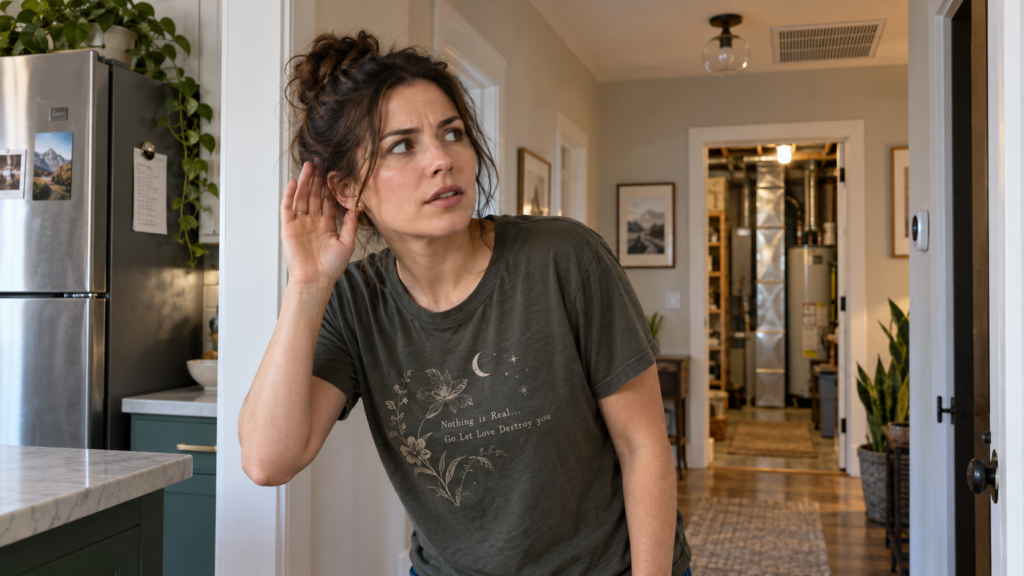
Every home makes noise.
Pipes expand and contract. Refrigerators cycle on and off. Furnaces start. Water heaters heat. Ductwork moves slightly as temperatures change.
Most of those sounds are completely normal.
But some house noises to worry about are worth paying attention to—especially if the sound is new, unusually loud, getting worse, or accompanied by another symptom such as leaking, poor heating or cooling, electrical problems, or unusual odors.
That does not mean every strange sound is a mechanical breakdown.
And it certainly doesn’t mean every noise requires an immediate repair.
Instead, think of unusual sounds as information.
Your home may be giving you an early clue that something has changed.
The goal is to notice those changes, watch for additional warning signs, and know when it makes sense to have a qualified professional take a closer look.
Here are eight common household noises worth paying attention to.
1. Banging or Booming From the Furnace
A furnace normally makes some noise when it starts and stops.
You may hear the blower turn on, ductwork move slightly, or air begin flowing through the vents.
A loud bang or boom, however, is worth noticing—especially if it happens repeatedly.
Possible causes can include:
- Ductwork expanding
- Loose panels
- Airflow problems
- Burner or ignition issues
- Other mechanical conditions
Some of these are relatively minor.
Others deserve professional attention.
What should you do?
First, notice when the sound happens.
Does it occur:
- When the furnace first turns on?
- When the blower starts?
- When the system shuts down?
- Randomly while it is running?
You can also check simple homeowner-level items such as the HVAC filter and make sure supply and return vents are not blocked.
If the furnace is heating normally and the sound is minor, it may simply be something to monitor.
But if the noise becomes louder, happens repeatedly, or is accompanied by unusual odors, poor heating, or other changes in operation, have an HVAC professional inspect the system.
The important point is that the noise itself is not the problem—it may simply be a clue to what is happening inside the system.
2. Popping or Rumbling From the Water Heater
Tank-style water heaters can make popping, rumbling, ticking, or other sounds during normal operation.
As water heaters age, mineral sediment can also collect at the bottom of the tank.
When water heats underneath that sediment, it can sometimes create popping or rumbling sounds.
That does not automatically mean the water heater has failed.
But the sound is worth paying attention to.
Look for other signs such as:
- Reduced hot-water capacity
- Rust or corrosion
- Water around the tank
- Changes in water temperature
- Increasing noise over time
What should you do?
If the water heater continues to provide normal hot water and there are no leaks or other warning signs, monitor the sound.
If the noise becomes louder or is accompanied by leaking, corrosion, or reduced performance, have a plumber or qualified water-heater professional evaluate it.
An early inspection may help you understand whether the sound is normal aging, maintenance-related, or evidence of a developing mechanical issue.
3. Banging or Knocking Pipes
A loud bang in the plumbing after a faucet or appliance shuts off can be startling.
One possible cause is water hammer, which happens when moving water stops suddenly and creates a pressure shock in the plumbing.
You may hear this after:
- A washing machine fills
- A dishwasher runs
- A toilet shuts off
- A refrigerator ice maker fills
- A fast-closing faucet is used
An occasional mild noise may simply be something to observe.
Repeated or severe banging deserves more attention.
What should you do?
Try to identify which fixture or appliance causes the sound.
Pay attention to whether:
- The noise is getting worse
- Pipes visibly move
- Connections are leaking
- Water pressure seems unusually high
If the banging is frequent or strong, a plumber can evaluate the plumbing and help determine whether adjustments or repairs are needed.
Again, the noise is not necessarily a breakdown.
It is a reason to be more aware of how the plumbing system is behaving.
4. Grinding From an Appliance
Grinding is one of the more noticeable appliance sounds.
You might hear it from a:
- Dishwasher
- Washing machine
- Dryer
- Refrigerator
- Garbage disposal
- HVAC blower
Sometimes the cause is simple.
A foreign object may be rubbing against something.
A dishwasher may have debris near a moving component.
A garbage disposal may have an object inside.
Other times, grinding can indicate wear in a motor, bearing, pump, fan, or another moving component.
What should you do?
If the sound is new or severe, turn the appliance off and observe what else is happening.
Is the appliance still operating normally?
Is it leaking?
Does it stop mid-cycle?
Is there a burning smell?
For safe homeowner-level checks, follow the manufacturer’s instructions.
If the sound continues or appears to come from an internal mechanical component, have the appliance professionally inspected.
A grinding sound does not automatically mean the appliance is broken.
But it is usually worth investigating before continued use causes additional damage.
5. Buzzing From an Outlet, Switch, or Electrical Panel
Some electrical equipment can produce a faint hum during normal operation.
A new or persistent buzzing, crackling, or sizzling sound from an outlet, switch, breaker panel, or wall should be treated differently.
Electrical sounds can sometimes indicate:
- Loose connections
- A damaged receptacle
- A failing switch
- A problem with a breaker
- Electrical arcing
- Overheating
Pay particular attention if the sound comes with:
- Warm wall plates
- Discoloration
- Flickering lights
- Repeated breaker trips
- Burning smells
- Sparks
What should you do?
Do not remove an outlet or electrical panel cover to investigate energized wiring.
If a buzzing or crackling sound is persistent, have a qualified electrician inspect it.
This is less about whether something has already “broken” and more about preventing a small electrical problem from becoming a serious one.
6. Hissing Where You Don’t Expect It
Hissing can mean different things depending on where it comes from.
You might hear it near:
- HVAC equipment
- Plumbing
- A water heater
- A refrigerator
- An air vent
- A wall
Sometimes it is simply air or water moving through a system.
Other times, it may indicate a leak, restriction, pressure issue, or another condition worth investigating.
What should you do?
Try to locate the sound without taking anything apart.
Then look for additional clues.
Is there water nearby?
Is the HVAC system cooling properly?
Is the refrigerator maintaining temperature?
Is the sound constant or occasional?
If everything appears to be working normally, monitor it.
If the sound is persistent or accompanied by performance problems, leaks, or unusual smells, contact the appropriate professional.
7. Refrigerator Buzzing, Rattling, Clicking, or Popping
Refrigerators may be among the noisiest appliances in the house.
A modern refrigerator may normally:
- Click
- Hum
- Buzz
- Gurgle
- Pop
- Crack
- Drip
- Drop ice
- Change fan speed
So hearing an unusual sound from your refrigerator does not automatically mean it needs repair.
The more useful question is:
Has the sound changed?
If you’ve owned the refrigerator for years and it suddenly becomes much louder, starts clicking repeatedly, or begins making a new grinding or rattling sound, pay attention.
What should you do?
Check whether the refrigerator is still maintaining the proper temperature.
Also look for simple causes such as:
- The appliance vibrating against a wall
- Bottles or containers touching
- An ice maker operating
- Items blocking airflow
- A loose shelf or drawer
If the refrigerator is cooling normally and the sound is minor, continue to monitor it.
If the sound is accompanied by warming temperatures or other performance problems, schedule service.
8. Repeated Clicking That Never Leads to Normal Operation
Many home systems make a click when they start.
One or two clicks may be completely normal.
Repeated clicking is more meaningful when something fails to happen afterward.
For example:
- A furnace clicks but never ignites
- An air conditioner repeatedly tries to start
- A refrigerator clicks but stops cooling
- An appliance clicks but never begins its cycle
The sound itself is not necessarily the mechanical problem.
The important clue is that the system is trying to operate but not completing its normal sequence.
What should you do?
Pay attention to both the sound and the system’s performance.
If something is still working properly, monitor it.
If the system repeatedly attempts to start but cannot operate normally, have a qualified professional inspect it.
Not Every Strange Noise Means Something Needs Repair
This is probably the most important takeaway.
Homes make noise.
Sometimes strange noises are simply part of normal operation.
Refrigerators click.
Ductwork expands.
Water heaters tick.
Plumbing moves.
Appliances hum.
You do not need to call a contractor every time your house makes a sound.
Instead, ask yourself:
Is the sound new?
Is it becoming louder or more frequent?
Has the system’s performance changed?
Are there other warning signs?
Those questions are far more useful than the sound alone.
What Other Warning Signs Should You Look For?
An unusual sound becomes more meaningful when it is accompanied by something else.
Watch for:
- Water leaks
- Loss of heating or cooling
- Weak airflow
- Appliances that stop completing cycles
- Refrigerator temperatures rising
- Burning smells
- Repeated electrical trips
- Visible corrosion
- Unusual vibration
- Error codes
- Reduced hot-water capacity
- Equipment repeatedly starting and stopping
Those additional symptoms can help a professional diagnose what is actually happening.
Record the Sound
One of the simplest things you can do is record the sound on your phone.
Strange household noises have an inconvenient habit of disappearing the moment a technician arrives.
A short video or audio recording can help show:
- What the sound is like
- How loud it is
- How long it lasts
- What the system is doing when it occurs
That information can be much more useful than saying, “It made a weird noise yesterday.”
When Should You Have a Professional Check It?
Consider professional evaluation when a noise is:
- New
- Getting louder
- Happening more often
- Accompanied by poor performance
- Associated with leaking
- Connected to electrical problems
- Difficult to identify
- Concerning enough that you are uncomfortable continuing to use the equipment
You do not necessarily need to wait until something completely stops working before asking a professional about it.
An inspection can sometimes help identify maintenance needs or developing problems before they become larger repairs.
When Is a Noise an Emergency?
Some sounds deserve immediate attention because of the other conditions occurring with them.
Seek appropriate help if you notice:
- Smoke
- Sparks
- Strong burning odors
- A gas-like odor
- Significant water leaking
- Severe electrical buzzing or crackling
- Equipment overheating
- Loss of heat during dangerously cold conditions
In situations involving fire, electrical danger, gas, or another immediate safety concern, prioritize safety first.
How Does a Home Warranty Fit In?
SilverBack Home Warranty is designed to help with qualifying mechanical breakdowns caused by normal wear and tear, subject to the terms, limits, and exclusions of the homeowner’s plan.
An unusual sound by itself does not necessarily mean there has been a mechanical breakdown.
Often, the sound is simply a reason to pay closer attention.
For example:
A furnace may begin making a new noise while continuing to heat normally.
A refrigerator may start rattling but still maintain the proper temperature.
A water heater may make more noise as sediment builds up.
In those situations, monitoring the equipment or having a professional inspect it may help determine whether anything is actually wrong.
If a covered system or appliance eventually experiences a mechanical breakdown due to normal wear and tear, that is when the home warranty claim process becomes relevant.
The important distinction is between:
A warning sign or maintenance concern
and
An actual mechanical breakdown.
Understanding that difference can help homeowners make better decisions about caring for their homes.
Frequently Asked Questions About Strange House Noises
What house noises should I worry about?
Pay closer attention to new, unusually loud, persistent, or worsening noises—especially when they are accompanied by leaking, electrical problems, poor heating or cooling, unusual smells, or changes in appliance performance.
Does a strange noise mean something is broken?
Not necessarily.
A strange noise can be a normal operating sound, a maintenance issue, or an early indication that something is changing. Look for other symptoms and consider professional evaluation if the sound persists.
Should I call for repair every time I hear a new sound?
Usually not.
Start by observing the system and checking for other warning signs. If everything is operating normally and the sound is minor, monitoring it may be appropriate.
Why is my furnace making a banging noise?
Possible causes range from ductwork movement to ignition or mechanical issues. Notice when the bang occurs and whether the furnace is heating normally. Persistent or severe noises should be professionally evaluated.
Why is my water heater popping?
Sediment buildup can cause popping or rumbling sounds in tank-style water heaters. If the noise increases or you notice leaking, corrosion, or reduced hot-water performance, have the unit inspected.
Why do my pipes bang?
Sudden plumbing bangs may be caused by water hammer. If the problem is frequent or severe, a plumber can check the water pressure and plumbing system.
Is refrigerator noise normal?
Often, yes.
Refrigerators naturally click, buzz, hum, gurgle, pop, and make ice-related sounds. A new noise combined with poor cooling or another performance issue deserves more attention.
Does a home warranty cover strange noises?
A home warranty generally covers qualifying mechanical breakdowns due to normal wear and tear according to the contract—not sounds themselves.
If a noise leads to the discovery of a covered mechanical breakdown, the diagnosed failure is what determines how the home warranty applies.
Listen to Your Home—Without Assuming the Worst
Your home doesn’t have to be silent to be healthy.
Many of the noises you hear every day are normal.
The goal is not to become worried every time something clicks, pops, or hums.
Instead, learn what your home normally sounds like.
When something changes, pay attention.
Look for other symptoms.
Record the sound.
Monitor performance.
And when something doesn’t seem right, have the appropriate professional take a look.
Sometimes that inspection will reveal a mechanical problem.
Other times, you’ll learn that the sound is completely normal.
Either way, being aware of changes in your home can help you catch problems earlier and make better decisions about maintenance and repairs.
SilverBack Home Warranty — We’ve got your back.