
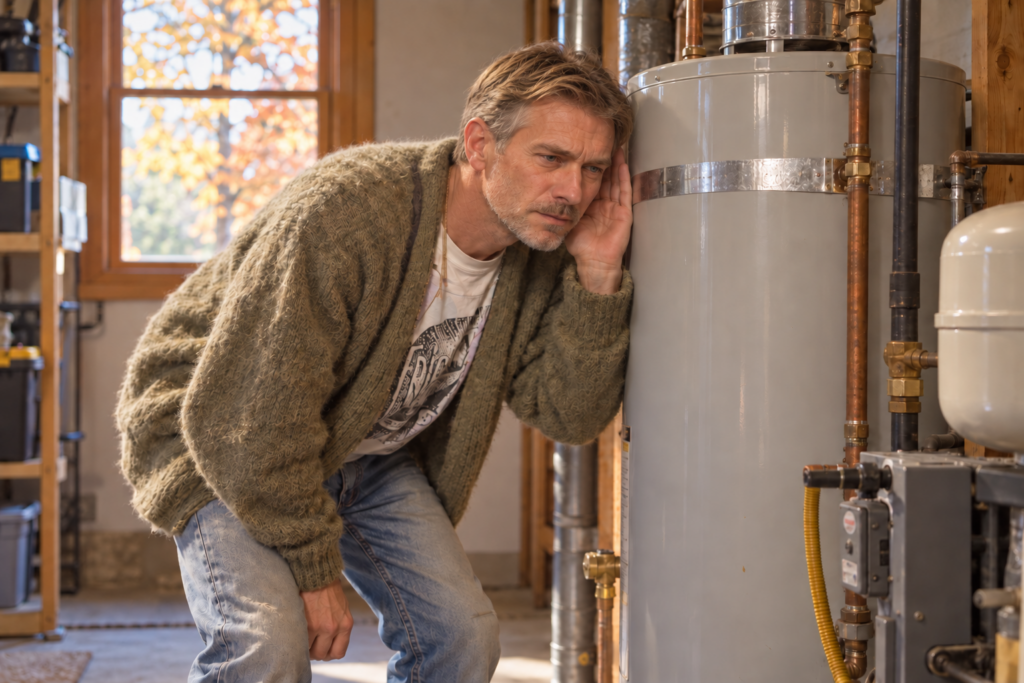
Your water heater has probably been working quietly in the background for years.
Then one day, while you are walking past the utility room, you hear it.
Pop. Pop. Rumble.
It sounds a little like popcorn being made in the basement, except nobody asked for a snack.
A water heater making noise does not automatically mean it is about to fail. But a new, persistent sound is worth paying attention to.
Popping and rumbling in a tank water heater often point to mineral deposits or sediment. Other sounds can have different causes, and the noise alone cannot tell you exactly what needs repair.
Here is how to make sense of what you are hearing, what to look for safely, and when to call a plumber.
Why Is My Water Heater Popping or Rumbling?
In a tank-style water heater, minerals and other material can settle at the bottom of the tank over time.
As the heater warms the water, water around those deposits may create popping, bubbling, or rumbling sounds.
Water heater manufacturers commonly identify sediment or mineral buildup as a cause of these noises. That makes it a useful possibility to investigate—not a diagnosis you can confirm by listening through the door.
The sound may be easiest to notice while the water heater is heating after a shower, laundry load, or dishwasher cycle.
If you have never noticed it before, make a note of when it happens and whether your hot water has changed.
Does the Type of Sound Matter?
Yes. The sound can help you describe the problem, even though it cannot identify the exact cause on its own.
Popping or Crackling
Popping may be associated with mineral deposits inside a tank-style water heater.
It can also have other explanations depending on the heater’s design and operating conditions. For example, a manufacturer’s manual may describe some sounds during heating or cooling as normal for a particular model.
Pay closer attention if the popping is new, getting louder, or accompanied by poor hot-water performance.
Low Rumbling or Bubbling
A rumbling sound during a heating cycle is another possible sign of sediment in the tank.
Manufacturer guidance also associates persistent rumbling with deposits that may affect how the heater operates.
Banging or Knocking
Try to determine whether the sound seems to come from the heater or from nearby pipes.
A bang heard when a faucet or appliance shuts off may call for a different plumbing investigation than rumbling heard from the tank while it heats.
You do not need to solve that mystery yourself. Noting when the sound occurs gives a plumber a better starting point.
Hissing or Sizzling
A brief sound can have different explanations across water heater models.
Look for visible moisture from a safe distance, and check the owner’s manual for your unit. If the sound is new or persistent, especially with water where it should not be, arrange an inspection.
Do not remove a cover or reach around hot components to track down a sound.
Is a Rumbling Water Heater Dangerous?
A rumble by itself does not establish that the water heater is dangerous or about to burst.
It does tell you to pay attention.
Check whether the heater is also:
- Producing less hot water than usual
- Taking longer to recover after hot water is used
- Delivering inconsistent water temperatures
- Showing moisture or leaking around the unit
- Making a sound that is becoming louder or more frequent
Sediment can interfere with water heater performance. Persistent noise together with changing hot-water performance is a good reason to have the heater evaluated.
If you smell gas, leave the home and contact your gas utility or emergency services from outside. If a carbon monoxide alarm sounds, get everyone outside and call 911. Do not continue investigating the water heater first.
What Can You Check Yourself?
You do not need to open the water heater to gather useful information.
Start with a simple visual and listening check.
Notice When the Noise Happens
Does it happen:
- While the heater is actively heating?
- Right after someone uses hot water?
- When a faucet turns off?
- At random times throughout the day?
A short recording may be useful if the sound comes and goes.
Look for Water Around the Heater
From a safe position, check the floor, the visible connections, and any drain pan.
Look for:
- Puddles
- Dampness
- Rust-colored staining
- New corrosion
- Water running from a pipe or valve
If you find an active leak, contact a plumber promptly. Keep away from electrical parts and hot water.
Pay Attention to Hot-Water Performance
Ask yourself whether the showers are getting shorter for reasons nobody agreed to.
Note whether the water is heating normally, running out sooner, or changing temperature unexpectedly.
That information helps distinguish a noise with otherwise normal operation from a broader performance problem.
Find the Model Information
If the manufacturer label is accessible without moving or opening equipment, take a photo of it.
The model number helps you find the correct owner’s manual and gives a plumber useful information.
Should You Flush the Water Heater?
Flushing a tank water heater can remove some sediment, and manufacturers include it in maintenance guidance for many models. The correct procedure and schedule depend on the equipment and its instructions.
It is not a task to improvise from a short internet checklist.
Water in the tank can be hot enough to burn you. The procedure also involves valves, a drain connection, and steps that differ between gas and electric equipment.
If you know your heater’s maintenance procedure and are comfortable following its manual, use those specific instructions. If you have never flushed the tank, the drain valve looks damaged, or you are unsure how to shut down and restart the heater correctly, ask a qualified plumber to handle it.
A flush may help with loose sediment. It cannot be counted on to solve every noise or repair a deteriorating tank. Have persistent symptoms evaluated rather than repeatedly draining the heater and hoping for the best.
What If the Water Heater Is Tankless?
This article’s sediment-at-the-bottom explanation mainly concerns tank-style heaters.
A tankless water heater operates differently. Mineral scale can still affect it, but the sounds and maintenance procedure need to be assessed using that model’s instructions.
If your tankless unit begins making a new noise, record when it happens and note any error code or change in hot-water delivery. Contact a qualified service professional if the cause is unclear.
Do not apply tank-flushing instructions to a tankless unit.
When Should You Call a Plumber?
Arrange an inspection when:
- Popping or rumbling is persistent or getting louder
- Hot water runs out sooner than it used to
- Water temperature becomes inconsistent
- You see a leak, corrosion, or new staining
- The sound seems to come from a valve or pipe rather than the tank
- Maintenance has not helped
- You do not know the heater’s maintenance history
- You are unsure whether the sound is normal for your model
Contact a plumber promptly for an active leak. Explain where the water appears to be coming from and whether it is flowing continuously.
For gas odor or a carbon monoxide alarm, leave the home and seek emergency help instead of scheduling a routine visit.
Does a Noisy Water Heater Need to Be Replaced?
Not necessarily.
A sound is a symptom, not a replacement decision.
A plumber may find a maintenance issue, a repairable component problem, or a more significant condition. The heater’s age, condition, performance, and diagnosed fault all matter.
Likewise, a noisy heater that still produces hot water should not be ignored indefinitely. A new sound is your cue to investigate before a smaller concern becomes a much less convenient surprise.
Does a Home Warranty Cover a Noisy Water Heater?
Noise alone does not determine home warranty coverage.
SilverBack Home Warranty is designed to help offset the cost of qualifying mechanical breakdowns caused by normal wear and tear on covered systems and appliances, subject to the plan’s terms, limits, exclusions, and service-call fees.
Routine maintenance and a diagnosed mechanical failure are different things. A plumber’s findings—and the applicable policy—matter when determining whether a particular repair qualifies.
If you have a SilverBack policy and the water heater is not working properly, contact SilverBack through the claim process before arranging work so the problem can be reviewed and service coordinated under your plan.
Be ready to describe the noise, when it occurs, whether your hot water has changed, and whether you see any leaking.
Frequently Asked Questions About Water Heater Noises
Why is my water heater popping?
Popping in a tank-style heater is often associated with sediment or mineral deposits that have collected inside the tank.
The sound alone cannot confirm the cause. Note whether it happens during heating and whether the heater’s performance has changed.
Why is my water heater rumbling?
Sediment at the bottom of a tank is a common possibility, particularly when the sound happens during heating cycles.
Have a plumber assess persistent or worsening rumbling, especially if you are also getting less hot water.
Will flushing stop the popping noise?
Flushing may remove loose sediment and improve a noise related to that buildup.
It is not a guaranteed fix. Follow the instructions for your specific model or have a plumber perform the maintenance safely.
Can a water heater make noise and still work?
Yes.
A tank may continue producing hot water while making new sounds. Keep an eye on its performance and arrange an inspection if the noise persists, worsens, or comes with other symptoms.
When is a noisy water heater an emergency?
A noise by itself is not necessarily an emergency.
An active leak needs prompt attention. If you smell gas or a carbon monoxide alarm sounds, leave the home and contact emergency services from outside.
Does a home warranty cover sediment in a water heater?
Do not assume that sediment buildup or flushing is a covered repair. Coverage depends on the diagnosed problem and the terms of your specific plan.
Contact SilverBack with your policy information if the heater has developed a problem and you need to start a claim.
Listen Now, Avoid Guessing Later
The next time your water heater sounds like it is preparing a pot of popcorn, you do not have to diagnose it by ear.
Notice when the sound happens.
Look for leaks.
Pay attention to your hot water.
Check the manual for your model.
And call a plumber when the noise persists or something about the heater’s performance changes.
A water heater making noise is giving you information. Taking a little time to listen—and getting the right help when needed—can make the next step much clearer.
SilverBack Home Warranty — We’ve got your back.